
It happens to all of us. You pick up your phone for a quick minute, and an hour later you’re still scrolling, feeling that familiar knot of guilt, comparison, or even anxiety start to tighten in your chest. The digital world is a powerful current, and sometimes we need more than just a screen-time limit—we need an anchor.
That anchor is the R.A.I.N. Technique, a profound mindfulness practice that can transform your reactive habits into moments of self-awareness and self-compassion. It’s not about forcing yourself to feel a certain way or immediately fixing the problem; it’s about seeing clearly and responding with kindness, especially when digital overwhelm hits.
Here is how you can use this simple, powerful tool to calm the inner storm and reclaim your focus for a healthier digital life.
What is the RAIN tecnique?
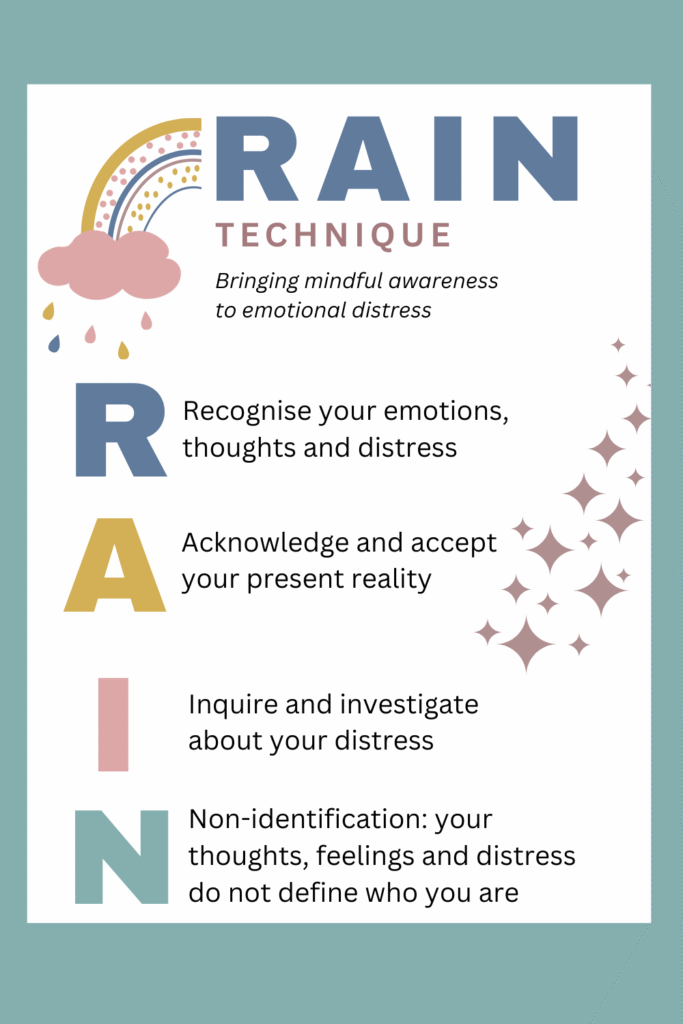
RAIN is an acronym that guides four steps you can use in the moment:
R — Recognize what’s happening (name the feeling, sensation, or thought).
A — Allow the experience to be present (make space instead of resisting).
I — Investigate with curiosity (where do you feel it in the body? what story is running?)
N — Nurture yourself with kindness (offer reassurance, caring words, or a soothing image).
The version most commonly used today was shaped and taught widely by mindfulness teachers like Michele McDonald and Tara Brach; Tara’s framing of the practice emphasizes self-compassion in the “N” step. Use this anytime — sitting in a formal practice or during a stressful moment at work.
Why it helps?
RAIN doesn’t try to fix or correct an emotion. Instead it changes your relationship to it. Naming and bringing mindful attention reduces the automatic fusion with thoughts; allowing reduces the extra layer of suffering that comes from fighting the feeling; investigating creates insight and disempowers habitual reactivity; and nurturing rebuilds the internal safety that often gets threatened by strong emotions. Clinical and popular mental-health sources list RAIN as an accessible tool for emotional regulation and self-compassion, and therapists often integrate it into CBT, DBT, and other approaches because it complements emotion-focused work.
How to practice — simple script (3–6 minutes)
Use this when a feeling is strong but you can still pause for a moment.
Pause and breathe. Two gentle breaths to bring attention inward.
Recognize: Softly name it: “Ah — anxiety,” or “Hello, sadness.” Notice thoughts and body sensations without judgment.
Allow: Say to yourself: “This is happening; it’s okay that it’s here.” Soften the urge to push it away. If your mind tries to fix it, keep returning to the sensation.
Investigate: Ask one or two curious questions:
“Where do I feel this in my body?”
“What story is running right now?”
“What does this feeling want me to know?”
Use gentle curiosity, not interrogation.
Nurture: Offer kindness — a phrase like, “May I be kind to myself in this moment,” or imagine placing a warm hand over your heart. Give reassurance as you would a worried friend.
Finish: Take a breath and notice the next small shift. You may return to activity or sit a few more breaths.
Therapists suggest you move slowly through the steps; you don’t need to rush. Even short, repeated uses of RAIN during the day build resilience.
Practical variations (pick what fits you)
Micro-RAIN (30–60 seconds): Quick recognize + allow + one breath of nurture. Useful in meetings or while parenting.
Formal RAIN (10–20 minutes): Move more slowly through investigate — explore memories or beliefs connected to the emotion. Good for journaling sessions.
Child-friendly RAIN: Use simpler language: “I see your feelings,” “It’s okay to feel this,” “Tell me about it,” “I’m here.” This works well with teens or children.
When RAIN works best — and when to combine it with other tools
RAIN is ideal when you’re overwhelmed, stuck in rumination, or reacting automatically. It’s not a magic cure for every moment — sometimes practical problem solving, setting boundaries, or professional therapy are needed alongside RAIN. For example, if an emotion signals a real violation (abuse, danger, chronic stress), use RAIN to calm enough to take clear action, and seek outside support where appropriate. Many clinicians combine RAIN with therapeutic frameworks (CBT, DBT, trauma-informed care) to get the best outcomes.
Common mistakes and how to avoid them
Rushing the steps: Treating it like a checklist robs RAIN of its healing quality — slow down.
Using investigation as rumination: The “I” step should be curious, not self-critical. If you spin into blame, return to breath and nurture.
Skipping nurture: People often skip the final step; without it the practice can feel cold. Self-compassion is essential for real change.
Expecting immediate disappearance: RAIN changes your relationship to feelings — they may not vanish instantly, but they lose power over time.
Quick daily routine (3 moves)
Morning: 1 minute micro-RAIN after waking to check-in.
Midday: 3–5 minute formal RAIN if stress is rising.
Evening: Journal for 5 minutes about one RAIN session — what you noticed, what softened.
Small, consistent practice is better than long, infrequent sessions.
Examples (short scripts you can copy)
When anxiety hits: “Recognize: anxiety. Allow: I can feel this. Investigate: tightness in chest, thinking ‘what if…’ Nurture: It’s okay — I’m safe right now. I’ve handled hard things before.”
After a fight: “Recognize: anger and hurt. Allow: both are here. Investigate: what part of me feels unheard? Nurture: I’m allowed to feel this; I’ll take care of myself.”

The magic of R.A.I.N. is the pause it creates. It stops you from moving straight from stimulus (notification, urge, thought) to reaction (mindless scrolling, anger, guilt). In that pause, you gain the clarity and freedom to choose a healthier response.
Using R.A.I.N. doesn’t mean your digital devices magically lose their pull. It means you gain a reliable, inner tool to navigate that pull with wisdom and a gentle, accepting heart. It’s the ultimate step toward a truly sustainable digital detox, transforming moments of struggle into opportunities for self-awareness and peace.
8 FAQs (short answers)
Is RAIN a meditation or therapy?
It’s a mindfulness practice used in both meditation and therapeutic contexts.How long should each step take?
From a few seconds (micro) to many minutes (formal). Follow the pace that feels kind and present.Can RAIN make me feel worse?
If investigation turns into rumination or you reopen trauma without support, it can feel intense. If that happens, stop, apply grounding and seek support.Who created RAIN?
The method was articulated by Michele McDonald and popularized and taught widely by teachers such as Tara Brach.Can kids use it?
Yes—use simplified language and encourage physical reassurance (hand on chest).How often should I practice?
Daily or multiple times a week for best effects; micro-practices can be used whenever needed.Is RAIN evidence-based?
RAIN draws on established mindfulness practices that have evidence for reducing stress and improving emotional regulation; clinicians commonly use it adjunctively.What if I can’t “allow” a feeling?
Start smaller: allow the idea of it, or simply notice the urge to resist. Over time, tolerance grows.