
In a world full of alerts, comparisons and endless scrolling, gratitude can feel both like a lifeline and a cliché. The difference between a shallow “list” and a meaningful practice is presence. When you unplug and slow down, gratitude becomes a practical way to rewire attention, reduce reactivity, and notice the small things that make life livable. This guide gives you straightforward methods — from quick micro-practices to deeper rituals — so you can actually feel gratitude, not just check a box.
Why gratitude matters for digital detoxers
Refocuses attention: Screens train your brain to hunt for novelty; gratitude trains it to linger on value.
Buffers stress: Noticing what’s already working helps reduce rumination and reactivity.
Strengthens relationships: Expressing thanks deepens real-world connections more than likes or comments ever will.
Adds meaning to downtime: When you step away from feeds, gratitude fills the resulting quiet with notice — and that notice is restorative.
If your goal is to reclaim attention and feel richer in your daily life, gratitude is not an extracurricular activity: it’s a core habit.
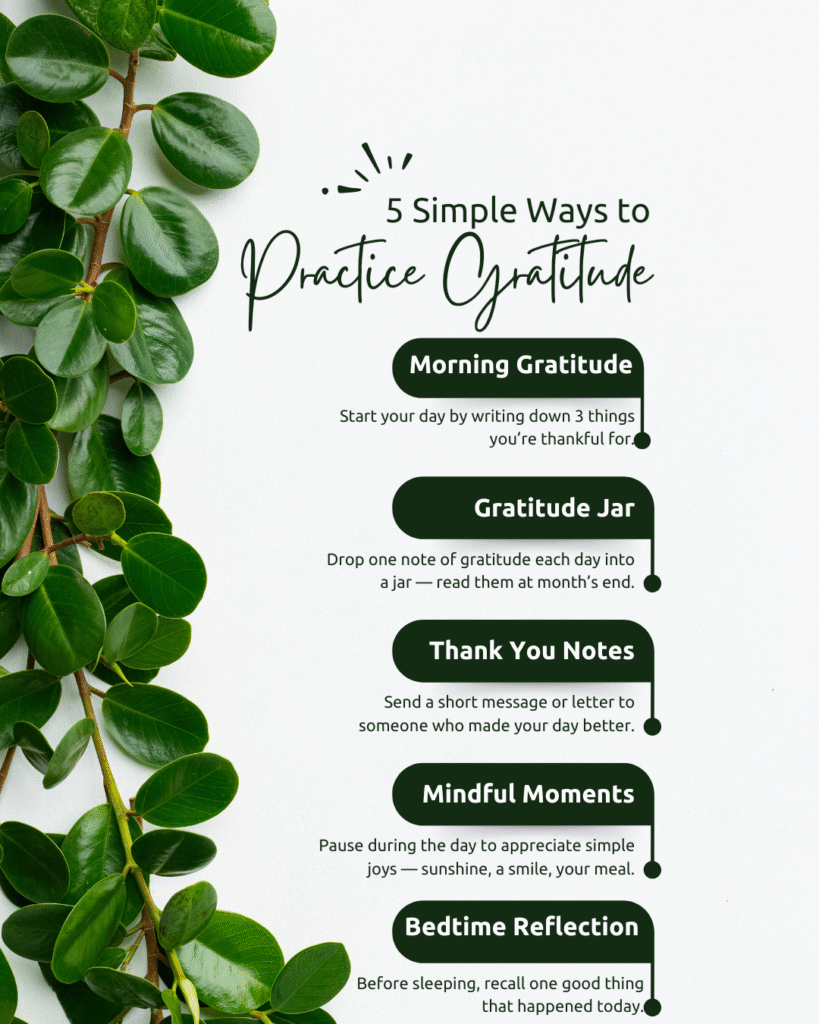
Quick starter kit — three practices for busy days
If you only have a minute or two, try one of these:
Three-thing pause (1–3 minutes): Before you start your day or right after you finish an offline hour, name three specific things you’re grateful for. Make them concrete: “the barista who remembered my order” beats “coffee.”
Glimmer pause (30 seconds): Scan your immediate surroundings and silently notice three small, pleasing things — a sound, a texture, a color. These tiny “glimmers” anchor your nervous system in calm.
Speak one thank-you: Send a 20-second voice message or tell someone one thing you appreciated about them. Saying it aloud amplifies the effect.
These micro-practices are ideal when you’re building habit after reducing screen time — quick, repeatable, and emotionally grounding.
Eight ways to practice gratitude — step by step
1. Gratitude journaling (but do it with depth)
Instead of a flat list, choose one item and write about it for two to five minutes: who was involved, what happened, how it made you feel, and why it matters now. Vivid detail turns memory into feeling. If writing isn’t your thing, record a quick voice note.
Tip: Keep a small notebook by your bed or a single document on your offline device. Consistency beats quantity.
2. The “Grateful Flow” visualization (embodied gratitude)
Sit quietly, take a few slow breaths, and imagine a warm, soft light moving through your body. With each inhale, bring to mind one gratitude — a person, a scene, a small act — and let the light expand. This connects cognition to bodily feeling and often produces a stronger emotional response than thinking alone.
3. Reframe with “What a privilege…”
When something feels annoying, reframe it as a sign of access or presence: “What a privilege to be able to wash dishes — because it means we had food.” This cognitive tilt helps convert routine frustrations into awareness of abundance.
4. Gratitude walks & mindful noticing
Take a short walk phone-free. Don’t solve problems; notice: the texture of the path, the rhythm of your steps, a sound in the distance. Name aloud (silently if you prefer) one thing you notice and why it matters. Movement plus observation is a strong habit anchor.
5. Gratitude letters & acts of thanks
Write to someone who helped you — even if you never send it. If you do send it, you’ll likely strengthen that relationship and lift both your moods. If writing is hard, leave a small, concrete act of kindness in their path: a thank-you note, a favor, a thoughtful message.
6. Gratitude for self (self-compassion)
List qualities, efforts or choices you appreciate in yourself. In a culture that compares constantly, gratitude directed inward is a radical, necessary practice.
7. Community challenges & sharing
Many people stick with gratitude when they do it publicly or in a buddy system. Try a 21- or 30-day challenge with a friend or small group. Share one sentence a day. The social element adds accountability and depth — not for likes, but for mutual support.
8. Mix it up to avoid boredom
Rotate formats: one week of short voice notes, one week of memory-focused journaling, one week of glimmer pauses. Variety prevents gratitude from feeling rote.

How to make it stick (practical habit tips)
Anchor to something stable: Pair gratitude with toothbrush time, your morning tea, or the end of your scheduled offline hour.
Start tiny: If a full journal feels heavy, do one glimmer pause daily for two weeks.
Accept the flat days: Some mornings you won’t “feel” grateful — that’s normal. Keep the practice compassionate and persistent.
Remove friction: Keep your tools handy: a tiny notebook, a shortcut voice memo, or a single app-free ritual.
Celebrate the return: Miss a day? Don’t punish yourself — simply come back. The habit grows from consistency, not perfection.
Common pitfalls and how to avoid them
Performance gratitude: If the practice is mainly for validation (shares, likes), it loses power. Keep at least part of it private.
Forcing feelings: You can’t manufacture emotion on demand. Begin with memory and meaning; sensations often follow.
Repeating the same list: Specificity matters. Swap “my family” for “the phone call from Mum that made me laugh.”
Mixing gratitude with obligation: If gratitude becomes another to-do, lighten the load. Practice should open you up, not weigh you down.
A simple 30-day mini challenge (outline)
This is designed for people doing regular digital detox moments. Commit to one small practice each day — keep it private or share with a buddy.
Week 1: Three things daily; two glimmer pauses; one gratitude walk.
Week 2: Memory journaling for three days; a gratitude letter; self-appreciation entries.
Week 3: Reframing chores as privileges; voice-note gratitude; mid-day glimmer pause.
Week 4: Share one gratitude with a friend; do a gratitude act; reflect in writing on what changed.
At the end of 30 days, review what stuck, which practices felt authentic, and how your attention changed.
Real talk: making gratitude feel honest
People in online communities often say the same thing: lists can feel performative. The key difference between shallow and deep practice is connection — to an image, a body sensation, a memory, or another person. When you slow down enough to allow the feeling rather than force it, gratitude moves from a habit to a resource.
If a practice feels fake, try a different entry point: a sensory memory, a tiny act of thanks, or thanking yourself for one hard choice. Over time, those small authentic moments outnumber the hollow ones.
How gratitude enhances a digital detox
Fills the silence with meaning. When you remove the feed, gratitude gives the quiet a focus.
Counters comparison. Instead of measuring up, you learn to notice what’s present for you.
Reconnects to embodied life. Senses, movement and relationships become the anchors that screens often displace.
Gives you tangible practices. Gratitude rituals are simple actions you can take without a device — ideal for detox periods.
Try this now (three-minute practice)
Put your phone face down.
Take three slow breaths.
Recall one small, specific thing that went well in the past 24 hours. Replay it for 30 seconds — who, what, how.
Say one sentence of thanks out loud or into a voice note.
Close your practice with a soft inhale and the intention to notice one more glimmer before your next screen check.
Gratitude is not a cure-all or a pressure to perform positivity. It’s a practical attention practice that deepens as you unplug and make room for life. Start small, keep it honest, and let the practice shape your digital detox: fewer compulsive checks, more moments that feel quietly rich.
FAQs on How to Practice Gratitude
1. What is the simplest way to start practicing gratitude?
Start with one small daily habit — such as naming three things you’re grateful for each morning. Keep it short and specific so the practice feels easy, not overwhelming.
2. How long does it take for gratitude to actually work?
Most people notice a shift within 2–3 weeks of consistent practice. The change is gradual: better mood, less reactivity, and more awareness of small positive moments.
3. Do I need a journal to practice gratitude?
No. A journal is helpful but not required. You can use voice notes, mental pauses, a notes app (offline), or speak your gratitude out loud during daily routines.
4. What if I don’t feel grateful at all on some days?
That’s normal. Gratitude isn’t about forcing emotions. On flat days, simply acknowledge one neutral or small thing — like a warm cup of tea or a comfortable seat — and move on.
5. Can gratitude help with stress or anxiety?
Yes. Gratitude shifts attention away from constant worry and helps calm your nervous system. Many people find it complements mindfulness, breathing practices, and digital detox routines.
6. Is gratitude the same as positive thinking?
No. Positive thinking tries to gloss over problems, while gratitude helps you notice what’s working even while challenges exist. It’s a grounded, realistic practice.
7. How do I keep gratitude from becoming repetitive?
Be specific and rotate methods. One day write a short letter, another day take a gratitude walk, and another day try a “glimmer pause.” Variety keeps the practice meaningful.
8. Can I practice gratitude while doing a digital detox?
Absolutely — it’s one of the best times to practice. Without constant screen noise, you can notice more, feel more present, and connect deeply with moments that are easy to miss.